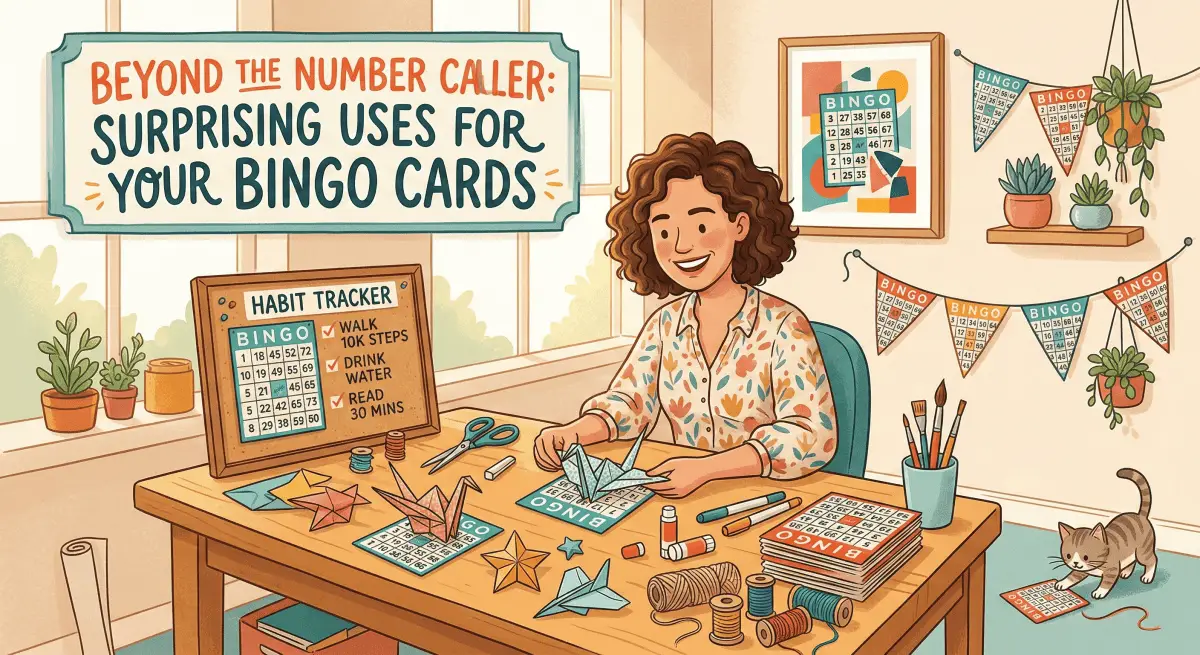
Right then, let's be honest. Bingo. It conjures images, doesn't it? Perhaps of smoky halls, formidable ladies with a hawk's eye for a missing number, and a prize that might just be a tin of biscuits. And for many of us, that's exactly what it is – a bit of harmless fun, a social flutter, a chance to escape the bins for an hour or two. I’ve organised my fair share of bingo nights, from charity fundraisers at the local church hall to lively affairs in the back room of a pub. And while the thrill of calling 'house!' never gets old, I’ve started noticing something. These bits of paper, often destined for the recycling bin after the last ball is drawn, are actually quite resourceful. They’re designed to be marked, to be looked at, to hold potential. Turns out, that potential stretches a good deal further than just daubing numbers.
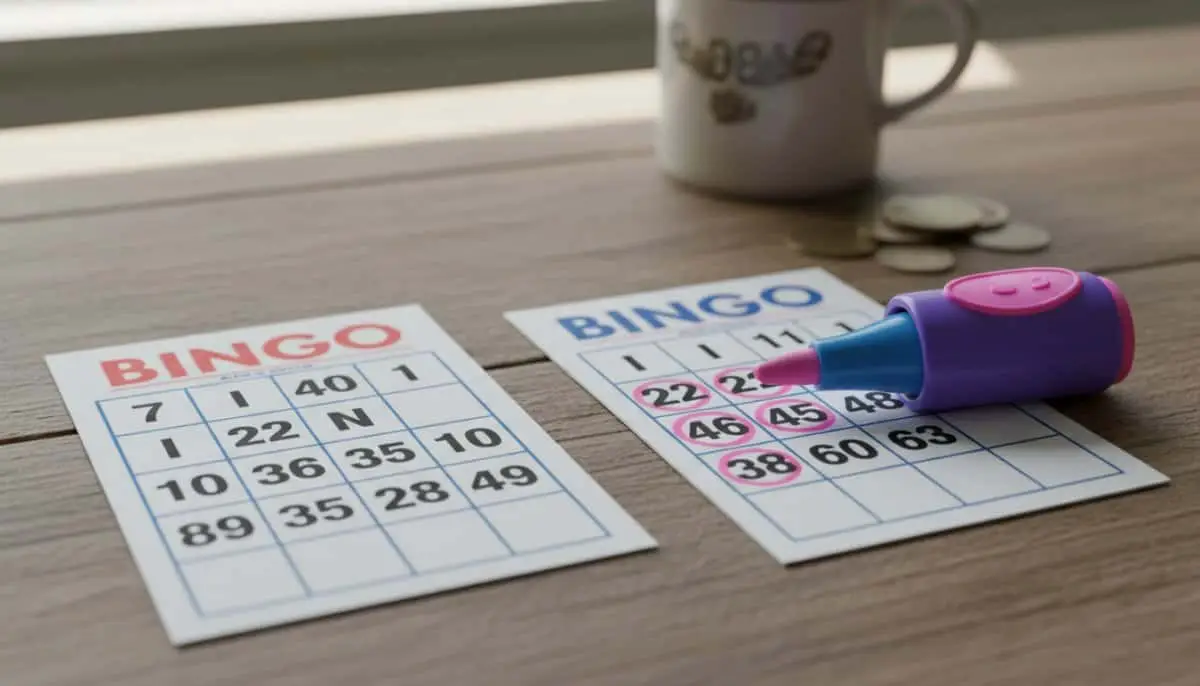
Unused and partially filled bingo cards with a dabber.
The Bingo Card's Secret Life
It’s easy to dismiss the bingo card as a bit naff, isn't it? We’ve all had those moments, staring at a card that’s seen better days, wondering if it’s about to fulfil its primary destiny: the bin. But before you consign it there, give it a second glance. Think about the grid itself – a neat, ordered structure. The numbers, of course, but also the spaces. Each one is a potential landing spot, a blank canvas. I’ve seen them used for all sorts of things, even when the numbers haven’t been called. They’re sturdy enough for a bit of creativity, yet flexible enough to be repurposed. Consider the sheer volume of cards generated by a busy bingo night – they’re practically an abundant resource waiting to be tapped. We’re talking about something that’s fundamentally a visual puzzle, a system of squares ready for interpretation. Why let that go to waste?
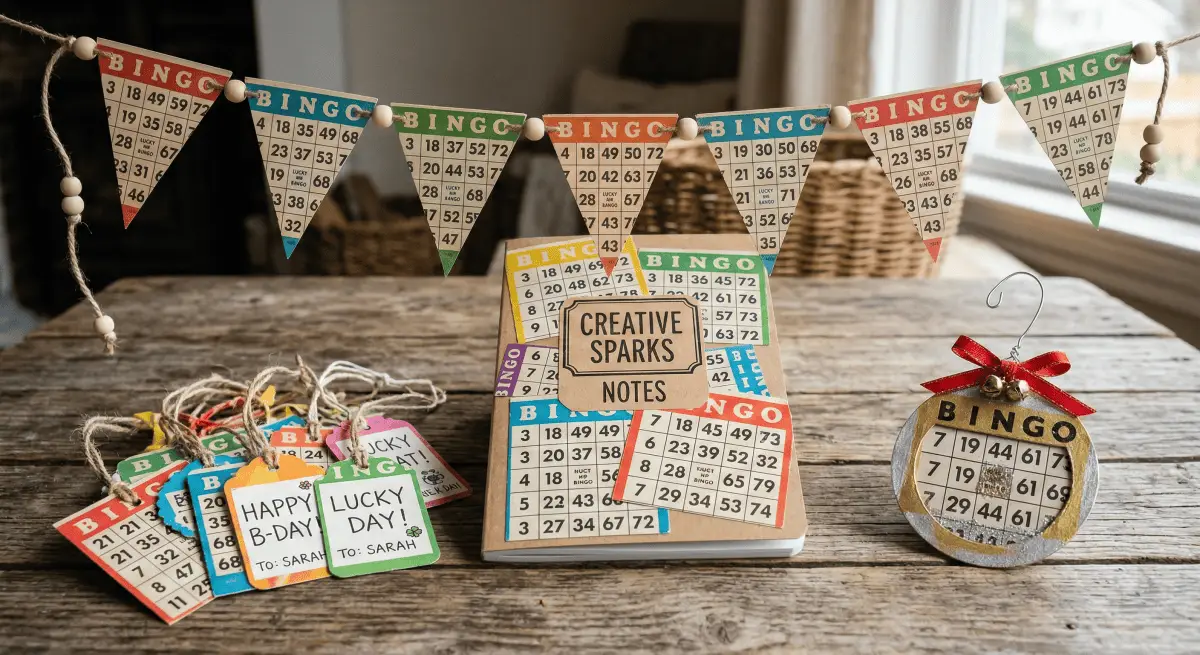
Handmade decorations crafted from bingo cards, including gift tags and bunting.
Turning Cards into Decorations
Right, let’s get our hands dirty. I’ve seen some absolutely cracking decorations made from bingo cards over the years. They’re surprisingly good for craft projects, especially for those who like a bit of a retro or kitsch aesthetic. For starters, you can cut them up. Think squares or strips. These can be glued onto cardboard to create unique gift tags for presents – far more interesting than shop-bought ones, and a nice nod to the giver’s personality. Or, make smaller squares and string them together, perhaps interspersed with beads or buttons, to create a festive garland. I saw one at a school fair made into bunting, and it looked brilliant, a real talking point. They’re also perfect for covering plain photo frames or notebooks. Just glue them on in overlapping layers, and you’ve got something that’s both personal and visually appealing. And for a bit of fun at Christmas, you can cut out the number squares and use them as baubles, perhaps spray-painted gold or silver and hung from the tree. It’s a bit of a project, mind you, but it’s rewarding when you see the finished result, and it’s cheap as chips.
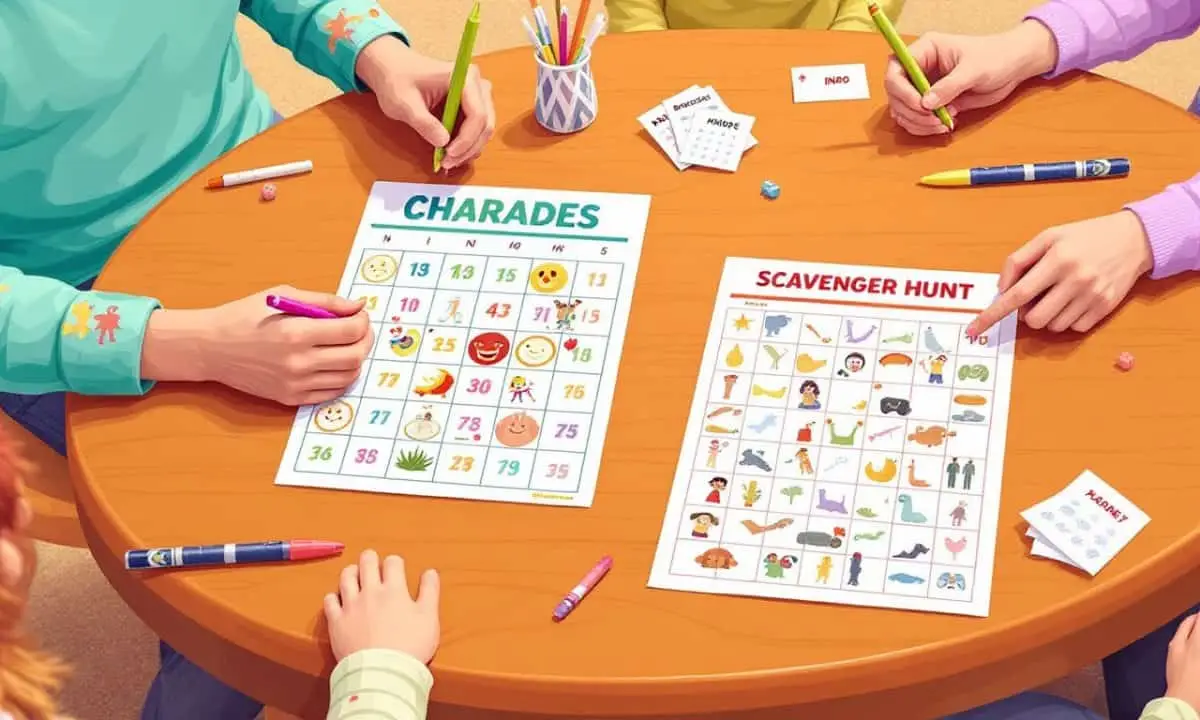
Bingo cards being used as aids for charades and a children's scavenger hunt.
Bingo Cards as Activity Aids
Now, if you're organising a party or a family gathering, those spare bingo cards can be absolute lifesavers. They’re not just for bingo, you know. Think about a 'scavenger hunt' for younger children. Instead of a simple list, you can create a bingo card with pictures of items they need to find around the house or garden – a red leaf, a smooth stone, a shiny button. They mark off each item on their card as they find it, and the first one to get a line wins a small prize. It makes the hunt more structured and visually appealing. For older kids or even adults, you can do a sort of 'Human Bingo'. Hand out cards with squares like 'Has travelled abroad,' 'Can play a musical instrument,' or 'Wears glasses.' Guests mingle and find people who fit the descriptions, getting them to sign the relevant square. The first to get a line or a full house wins bragging rights. It’s a brilliant icebreaker for parties where people might not know each other. I’ve also seen them used as a template for charades or Pictionary. Draw a square around numbers and assign a word or phrase to each. Kids can pick a number and act it out. It’s a simple way to add a bit of structure and surprise to party games without a lot of fuss.
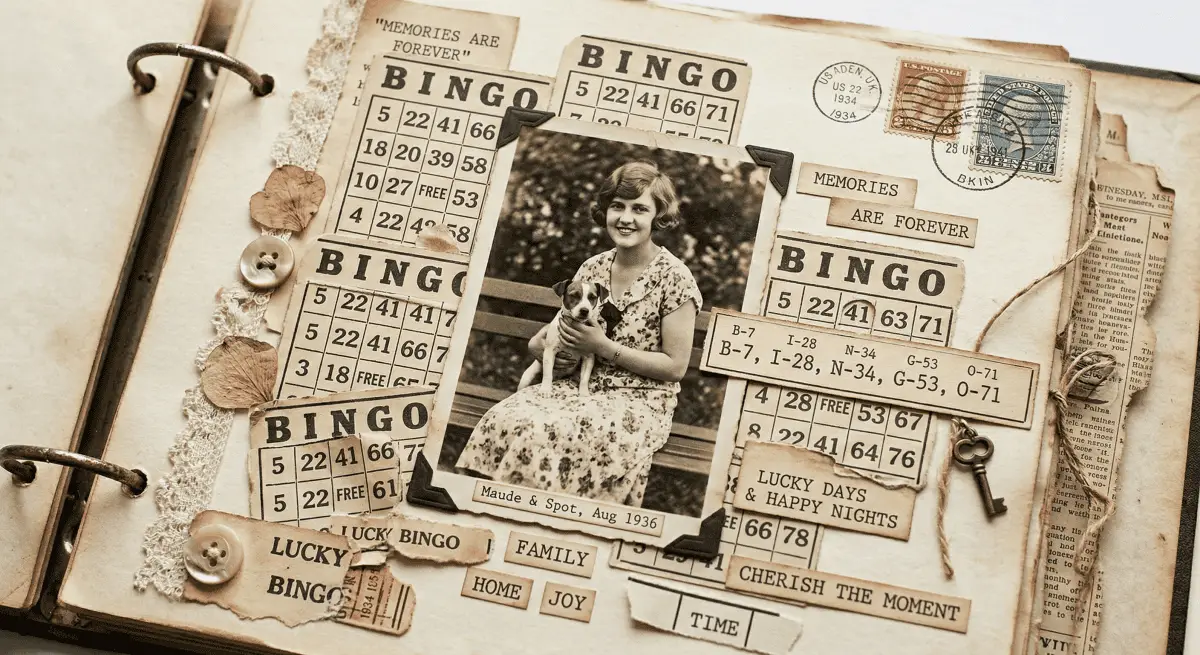
A scrapbook page featuring a photograph and decorative elements from bingo cards.
Scrapbook & Keepsake Charmers
For those who enjoy a bit of scrapbooking or keeping mementos, bingo cards offer a unique texture and visual element. I’ve seen people carefully cut out individual number squares, or even small sections of the grid, to incorporate into their pages. They can represent a specific date, a lucky win, or even just a memory of a fun night out. They add a touch of vintage charm that’s hard to replicate. You could use a whole card as a background for a photo from a bingo event, or cut out just the 'FREE SPACE' for a bit of ironic commentary. Another idea is to use them as part of a memory jar. Write down fond memories of events where bingo was played, or specific people you met, and fold them up to put inside a jar, with a bingo card as a decorative element on the outside. They make excellent bases for small, decorative collages too. Glue them onto cardstock and then add other embellishments – snippets of newspaper, old stamps, or photographs. It’s a wonderfully personal way to document experiences, and far more engaging than just a plain piece of paper. Think of it as adding a bit of lived history to your creations.
Unforeseen Practicalities
Beyond the obvious crafting and game applications, bingo cards can turn up in some surprisingly practical places. Now, I’m not talking about using them for anything too strenuous, mind you, they’re not exactly industrial-grade. But for little jobs around the house, they can be surprisingly handy. For instance, how many times have you needed a quick coaster? Place a bingo card on a surface, and it’ll protect it from a condensing glass of pop or a cuppa. It’s a bit basic, but it works in a pinch. Or use them as a barrier when you’re doing something a bit messy, like potting a plant indoors, to catch stray soil. They’re also quite good for sorting small items when you’re doing a craft project or tidying up. You can use the squares to keep different coloured beads, buttons, or screws separated. And if you’re packing delicate items, a few crumpled bingo cards can provide a bit of cushioning. I even heard of someone using them to help clean muddy boots after a walk in the countryside – the paper absorbs some of the moisture and grit, making them easier to brush off. It’s all about seeing the potential in a simple, familiar object. They might start with 90 numbers, but their uses are practically limitless.