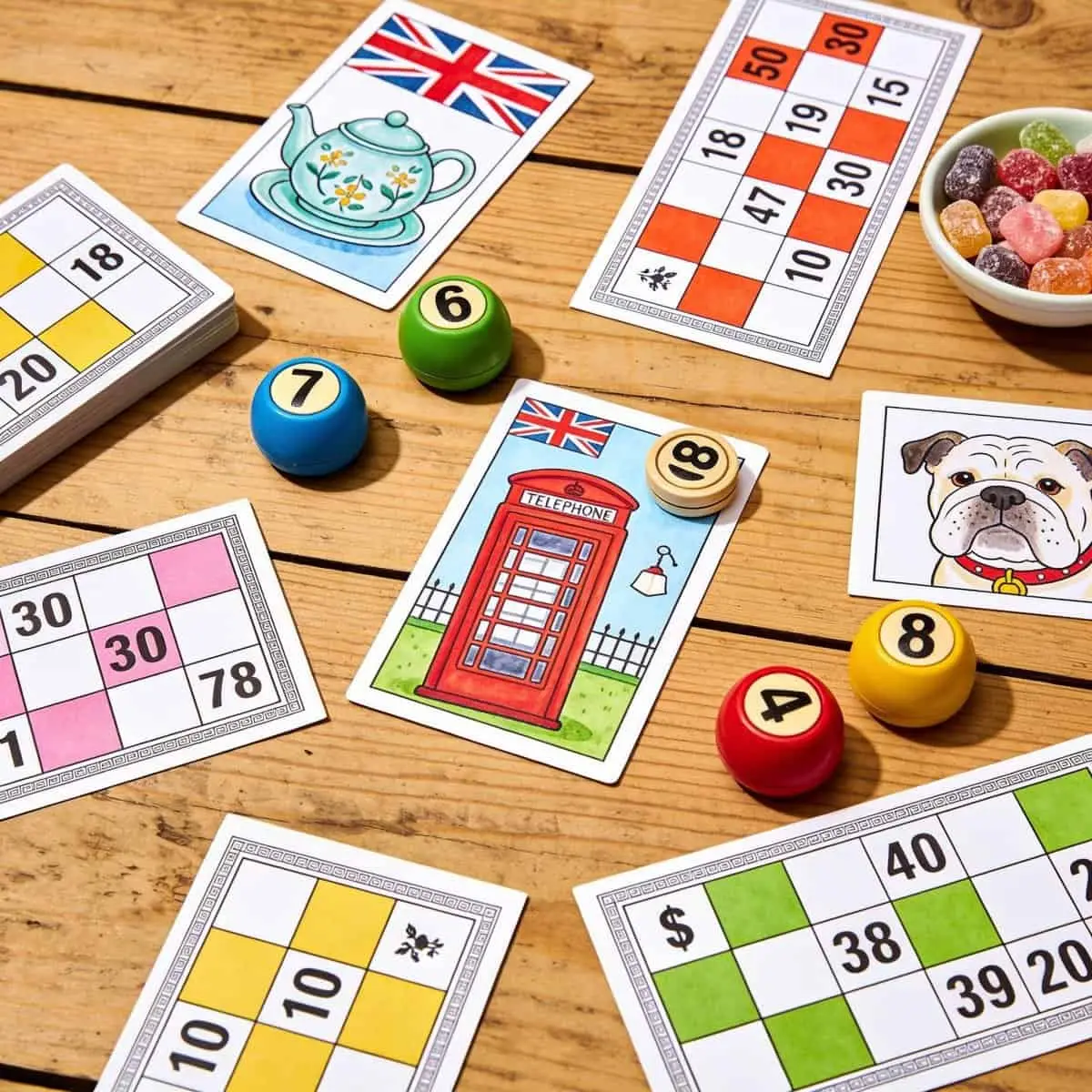
Right then, let's talk bingo cards. For years, they've been the humble bedrock of countless pub quizzes, school fetes, and charity fundraisers across the land. And for good reason! They’re simple, they’re accessible, and they can generate a fair bit of excitement (and a few quid for a good cause).
But, if you're anything like me, you might find yourself staring at a sea of identical, rather drab cards and thinking, 'Couldn't we do better?'
I’ve been running bingo nights for various local groups for donkey's years, from the WI to the local football club's fundraising do. And I’ll tell you, a bit of thoughtful design can make all the difference. It’s not just about the numbers; it’s about the experience. So, if you’re looking to add a personal touch to your next bingo bash, stick around. We're going to explore how to move beyond the standard issue and create a bingo card that’s not just a game, but a little bit of fun in itself.
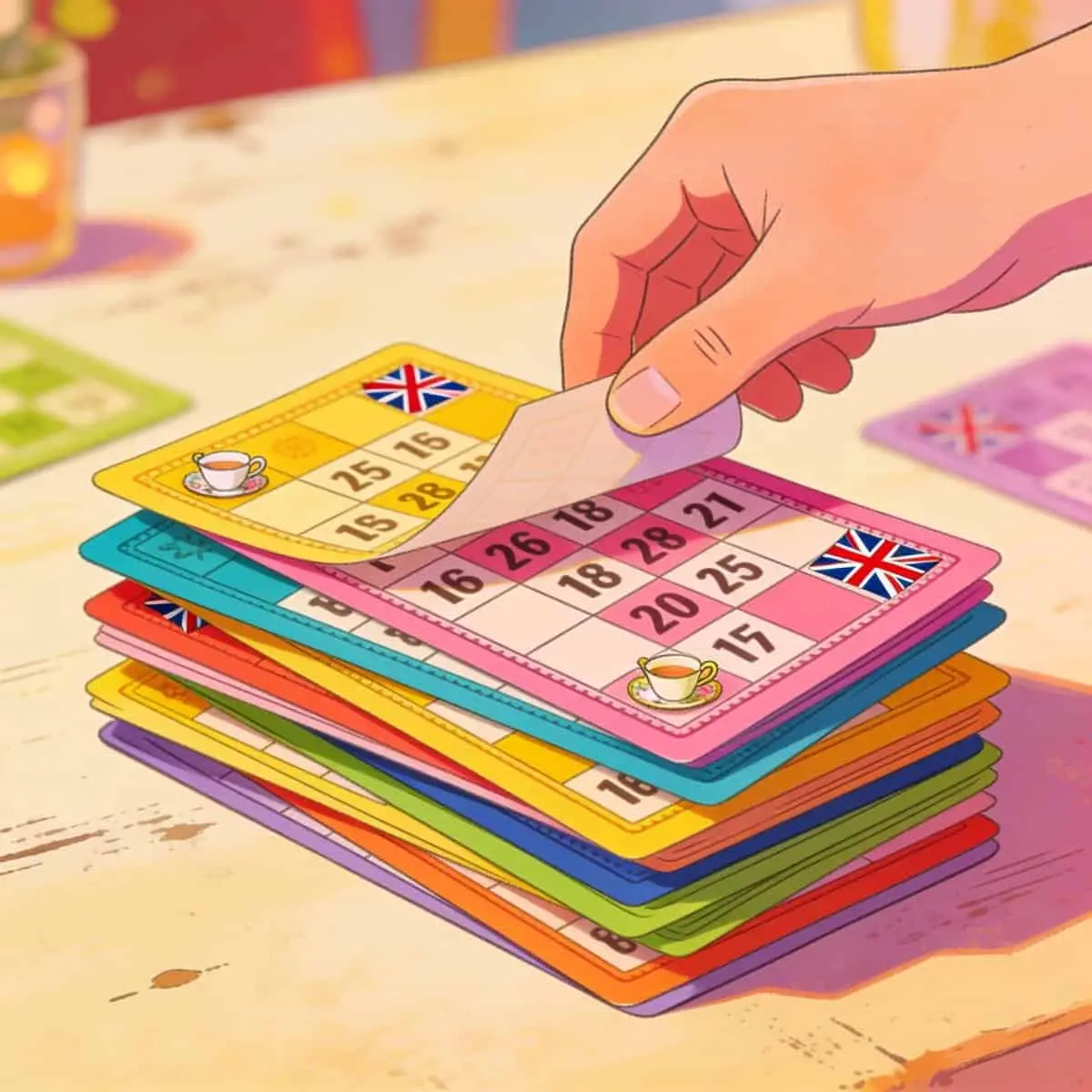
Stack of colourful, themed bingo cards with a hand reaching for one.
Why Bother with a Bespoke Card?
Now, I know what some of you might be thinking: 'It's just bingo, isn't it?' And yes, at its heart, it is. But think about it. You wouldn't serve lukewarm tea at a garden party, would you? A little extra effort goes a long way.
For charity events, a unique card can be a talking point, encouraging more people to join in. For a private party, it’s a chance to inject some inside jokes or themes. Imagine a birthday bingo where the numbers are replaced with significant dates, or a Christmas do where the squares have festive icons instead of boring digits. It adds a layer of engagement, makes the game feel more special, and frankly, it makes it more memorable. Plus, it shows your players you’ve put in the thought , and that’s always appreciated.
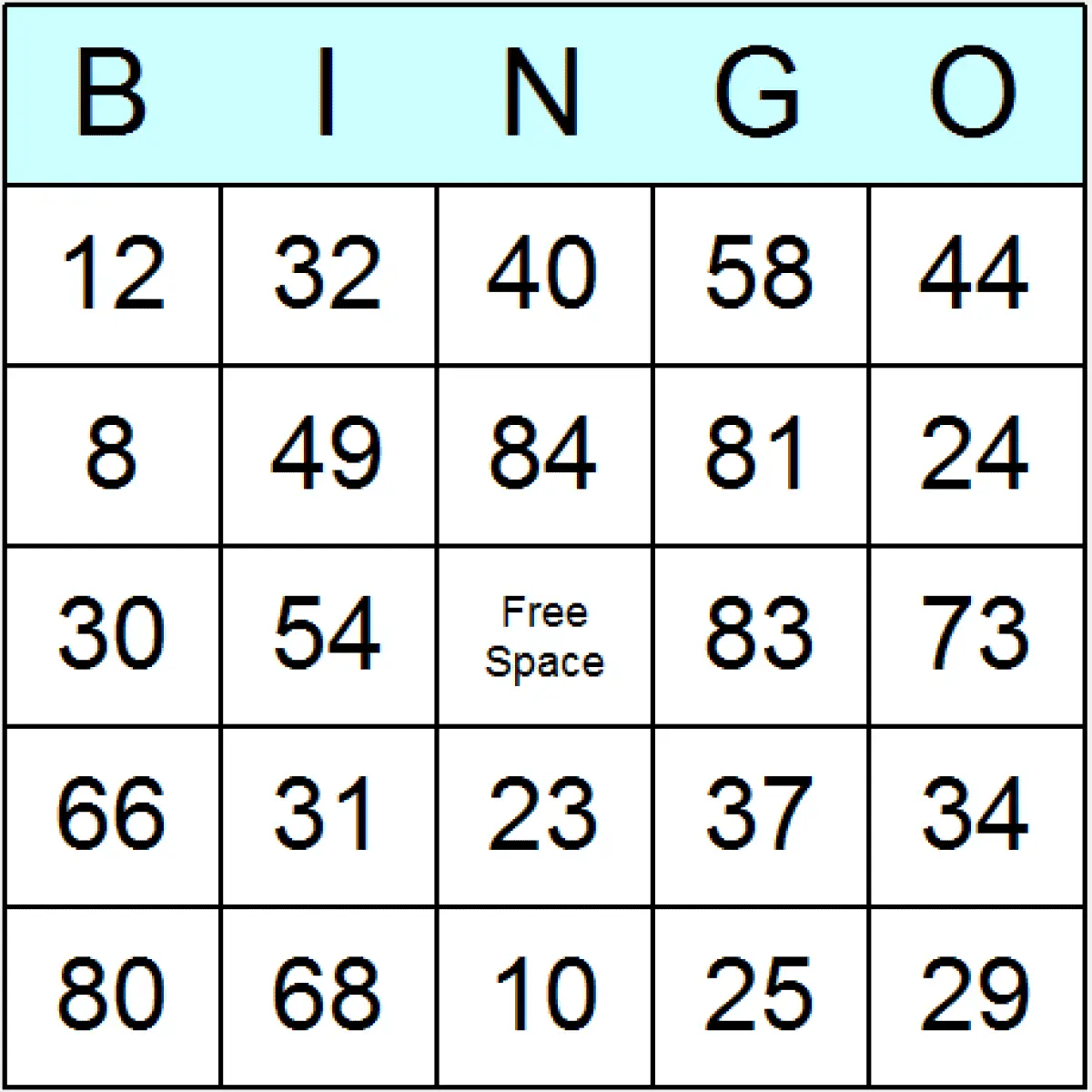
Graphic illustration of a 90-ball bingo card grid with number ranges.
The Anatomy of a Standard Bingo Card
Before we get too wild with design, it’s good to understand the blueprint of a traditional bingo card, especially for the 90-ball game we all know and love here in the UK. You’ve got your standard grid: 9 columns and 3 rows, making 27 squares in total. But here’s the clever bit: only 24 of those squares are actually filled with numbers. The middle square in the bottom row is usually blank , your free space, if you will.
The numbers themselves are distributed in a specific, rather pleasing way. Each column has a set range:
* Column 1: Numbers 1-9
* Column 2: Numbers 10-19
* Column 3: Numbers 20-29
* Column 4: Numbers 30-39
* Column 5: Numbers 40-49
* Column 6: Numbers 50-59
* Column 7: Numbers 60-69
* Column 8: Numbers 70-79
* Column 9: Numbers 80-89
This ensures fairness and a good spread of numbers. Understanding this structure is key, even when you start tweaking it.
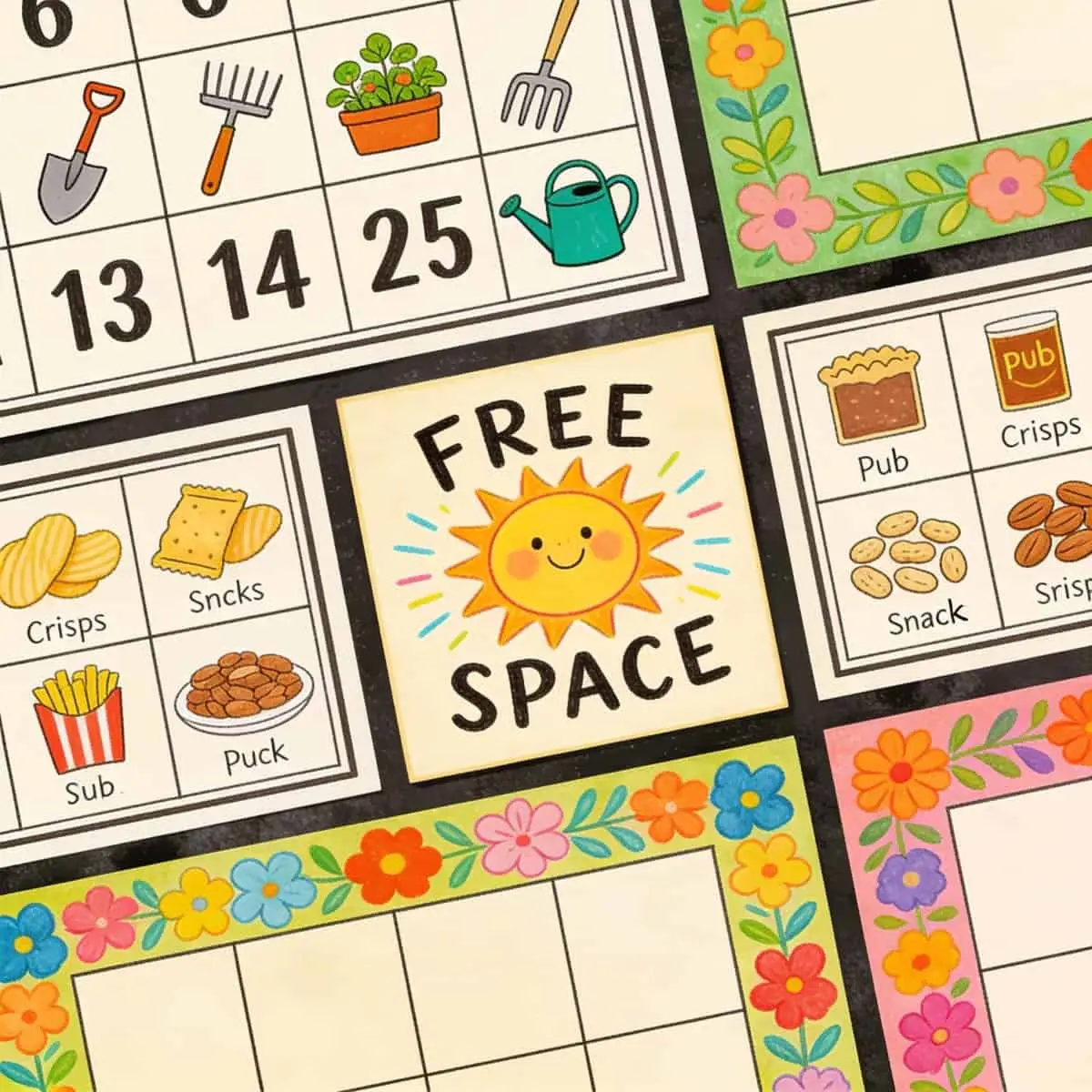
Collage of creative bingo card design elements: themed illustrations, colourful borders, and a special free space.
Beyond the Numbers: What Else Can You Design?
This is where the real fun begins! Once you’ve got the grid structure in mind, you can start playing. Forget just numbers for a moment. You could replace them entirely, or add them as a secondary element.
For a themed party, think about what fits. A 'Gardening Bingo' might have pictures of flowers, tools, or vegetables. A 'Pub Quiz Bingo' could use classic pub imagery , a pint, a dartboard, a pork scratching packet.
You can also get creative with the 'free space'. Instead of just a blank square, make it a picture relevant to the event or a funny quote.
Colour is another easy win. Instead of the usual black and white, use bright, cheerful colours. You could even assign different colours to different sections of the card, or have a different colour scheme for each card if you're printing them yourself. And don't forget the borders! A fancy decorative border can make the card feel much more special than a plain box. For a children's party, you might have cartoon characters peeking out from the edges.
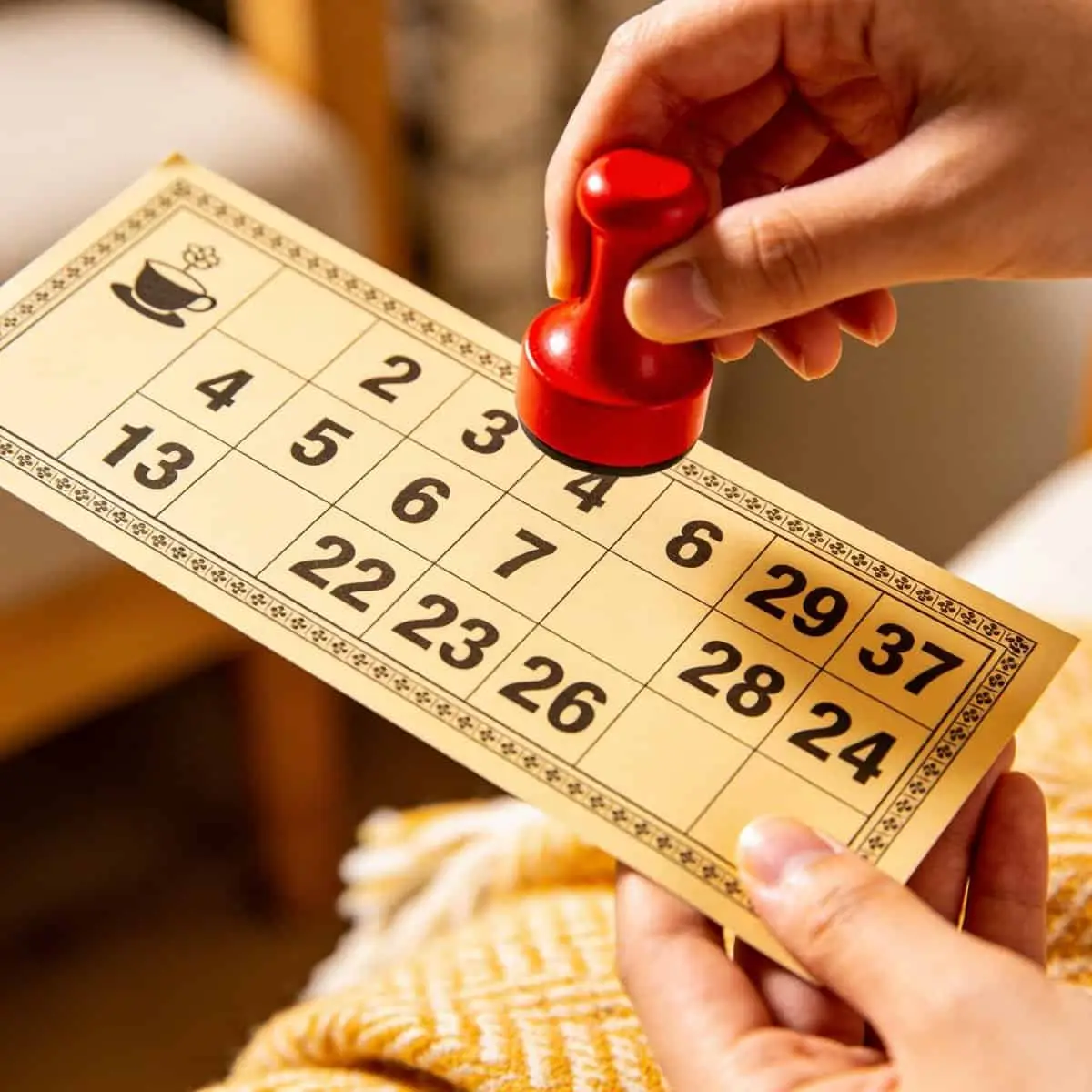
Hand holding a clear, custom-designed bingo card with a dabber ready.
Tips for Making Your Card a Winner
So, you're ready to design. Here are a few pointers from someone who’s been there, got the slightly ink-stained t-shirt.
First, keep it legible. Whatever you do, make sure the numbers or images are clear and easy to see. Nobody wants to squint at a tiny illustration or a faint number.
Second, consider your audience. A card for a bunch of retired gents at the bowls club might be different from one for a hen do. Tailor the theme and complexity.
Third, test your design. Print out a few copies and have a friend try to play a practice round. Are the images distinct enough? Are the numbers easy to call? Are there any ambiguities?
Fourth, don't overcomplicate. Sometimes, the simplest additions make the biggest impact. A nice colour scheme and a relevant theme are often enough.
Finally, if you’re printing yourself, think about ink and paper. Cheaper paper can get soggy if you’re using dabbers, and faint ink can be a nightmare. Cardstock and a decent printer are your friends.
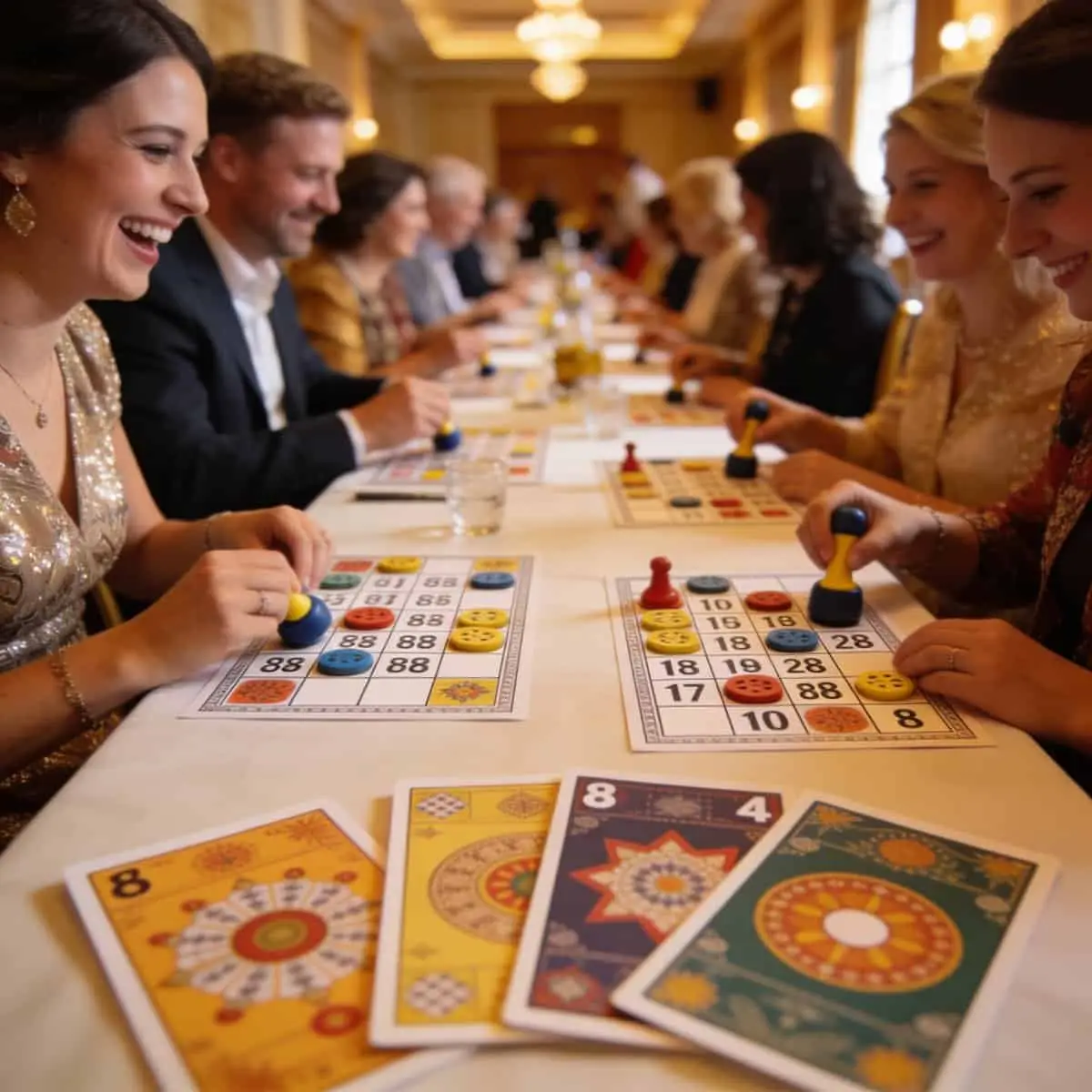
People enjoying a lively game of bingo with custom-designed cards.
Putting Your Custom Card to the Test
The moment of truth! You've designed, you've printed, and now it's time to see how your masterpiece holds up. The best way to do this is, of course, to run a game. Whether it's for a small family gathering or a larger community event, get your custom cards into the hands of your players.
Observe their reactions. Are they smiling? Are they commenting on the designs? Do they find it easier or harder to follow than a standard card? Feedback is invaluable. If a particular image was confusing, or a colour scheme too busy, you know for next time. Don't be afraid to ask people directly what they thought. Most people are happy to share their opinions, especially if it means a better bingo experience next time around!
And remember, the ultimate goal is to have fun. If your custom cards contribute to that, then you've designed a winner, no matter who gets 'House!' first.